Summary
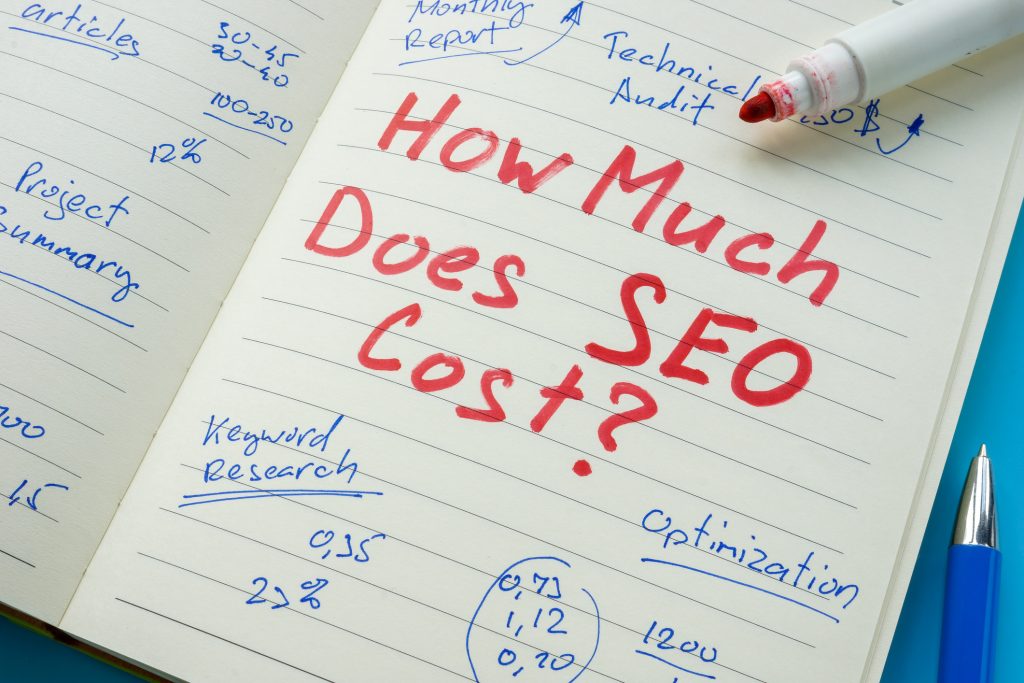
How much does SEO cost in 2026? The answer is not as simple as it used to be. With the rise of AI and automation, the way SEO is delivered has changed dramatically. Tasks that once required large teams can now be handled more efficiently, reducing the true cost of service while increasing output.
However, many agencies have not adjusted their pricing to reflect these changes. As a result, businesses are often paying outdated rates for services that can now be delivered faster and more effectively. Understanding what actually goes into SEO today is critical before making any investment.
In this article, we break down what SEO looks like in 2026, how automation has reshaped the industry, and what you should expect when it comes to pricing. More importantly, we explain how to evaluate whether you are getting real value or simply paying for an outdated model.
Have you ever noticed that when you are shopping for a website or a marketing agency, the first question is always, “What’s your budget?”
Years ago, that question actually meant something. In 2026, it carries far less weight than it once did.
Let’s be honest for a moment. The barrier to entry in online marketing is extremely low. Anyone with a laptop, internet access, and a basic website can present themselves as an SEO expert. The reality is that many of them lack real experience or a deep understanding of how search engine optimization truly works.
I have been working in online marketing, SEO, and web design for nearly 20 years. I still enjoy the work. Building systems, creating automations, and analyzing data to improve a client’s bottom line is something I genuinely care about.
What has changed is the environment. The industry has become more competitive, but not always in a productive way. Many agencies rely on fear-driven tactics. They send misleading reports, automated audits, and generic warnings to businesses in an attempt to win clients.
Because of this, a significant part of the job today is not just performing SEO. It is also defending it. Clients frequently receive emails claiming that something is wrong with their website. In many cases, those claims are inaccurate or completely fabricated.
Today, most of those emails are generated by AI. To save time, responses are often generated using AI as well. We review both the original message and the response carefully before sending anything back. It has created a strange cycle where automated problems are met with automated responses, while real people are left sorting through the noise.
Before we get into pricing, there is one important thing to understand.
The world of SEO in 2026 is very different from what it used to be.
What Actually Goes Into SEO in 2026?
To understand pricing, you first need to understand what an agency actually does when handling SEO.
The first step usually involves the website itself. An agency will either build a new website or improve an existing one. This process includes both technical SEO and onsite optimization, which ensure the website is properly structured for search engines and users.
Technical SEO still requires some manual work, but much of it can now be assisted by automation tools. Tasks like identifying broken links, improving site speed, and resolving crawl issues can be monitored efficiently using platforms such as SEMrush or Ahrefs. In most cases, once the initial setup is complete, ongoing technical maintenance requires minimal time unless new issues appear.
Onsite optimization has changed significantly. Today, much of it can be automated using artificial intelligence. This includes optimizing page structure, headings, metadata, internal links, and written content. Automation has drastically reduced the time required to perform these tasks compared to previous years.
However, not everything should be fully automated. Visual elements such as images and videos still require careful oversight. While AI can generate media, it is not always reliable. It can produce inaccurate or unrealistic visuals that may harm a brand’s credibility. In many cases, it is faster and safer to use real images from the client or high-quality stock photography.
Video production is similar. AI tools can assist in certain situations, but for most businesses, traditional video creation remains more practical and cost-effective. High-end AI-generated content may be useful for large-scale productions, but it is not necessary for most local or service-based businesses.
This brings us back to a common question agencies used to ask, which is about budget. In the past, this question helped determine the level of service a client could afford. It also helped agencies decide how much work they could allocate to a project.
Today, automation has changed that dynamic. Many of the tasks that once required full teams can now be handled more efficiently. This means the cost structure has shifted, even if many agencies have not adjusted their pricing models accordingly.
Stop Renting SEO. Own It!
Can SEO Really Be Automated?
At this point, you might be asking a simple question. If so much has changed, can SEO now be fully automated?
The answer is both yes and no.
Technical SEO is largely a one-time process. Once a website is properly structured, ongoing maintenance is minimal. Most issues can be tracked automatically through auditing tools, which scan the site regularly and flag any new problems. If everything is running smoothly, reviewing these reports may only take a few minutes each week or month.
Content creation and onsite optimization are where automation has made the biggest impact. Blog writing, internal linking, and page optimization can now be handled almost entirely by advanced AI systems. In fact, many agencies use complex automation workflows with hundreds of steps to generate a single piece of content.
These systems are not simple. They rely on detailed prompts, structured rules, and layered processes to produce content that reads naturally and aligns with SEO best practices. When done correctly, the result can rival or even outperform content written entirely by humans.
It is important to understand that Google does not prioritize whether content is written by a human or AI. What matters is quality, relevance, and usefulness. Content that provides value will perform well, regardless of how it was created.
That said, automation without oversight is a mistake. Even the most advanced systems can produce incorrect or misleading information. This is why quality control is essential. Every piece of content should be reviewed by trained professionals before it is published.
A strong process typically includes multiple levels of review. An SEO specialist will first evaluate the content to ensure it meets optimization standards. Then, a manager may review it again for accuracy, clarity, and overall quality. In some cases, a senior team member may also perform spot checks to maintain consistency.
Even with automation reaching a high level of accuracy, a small margin for error still exists. That small percentage is enough to damage a brand if left unchecked. This is why human oversight remains a critical part of the process.
So while SEO can be largely automated in 2026, it is not something that should be left entirely on autopilot.

Why SEO Pricing Still Varies So Much
Now that you understand how much of SEO can be automated, you might expect pricing to be simple. The reality is that it is still highly variable.
SEO costs depend on several key factors. These include your industry, your location, your competition, and the level of service you need. A small local business in a low-competition market will require a very different strategy than a company competing in a major metro area.
This is one of the reasons agencies have traditionally asked about budget early in the conversation. It helps determine the scope of work and the level of resources required to compete effectively. However, it also created an opportunity for some agencies to charge based on perceived value rather than actual workload.
There is another important factor that many business owners overlook. Some agencies work with multiple competitors in the same market. If an agency can confidently promise top rankings without understanding your competition, that should raise concerns. It is worth asking whether they are also working with other businesses in your area.
A strong agency should have clear policies around competition. At the very least, they should be transparent about who they work with and how they manage conflicts of interest. Without that clarity, you may be competing against your own marketing provider.
Automation has reduced the amount of labor required for many SEO tasks. In the past, entire teams handled content planning, writing, optimization, and quality assurance. Today, much of that work can be streamlined into efficient systems supported by a smaller team focused on oversight.
This shift has significantly lowered the true cost of delivering SEO services. However, many agencies have not adjusted their pricing to reflect these efficiencies. They continue to charge based on older models, even though the workload has changed.
As a result, pricing in 2026 does not always reflect the actual effort involved. It often reflects the agency’s business model rather than the real cost of the service.
What SEO Actually Costs in 2026
So, how much does SEO really cost in 2026?
The honest answer is that it still depends on your specific situation. However, what has changed is the value behind that cost.
Thanks to automation and AI, the level of service that once required a large budget can now be delivered much more efficiently. Work that previously required multiple teams can now be handled by smaller, more focused groups supported by advanced systems. This has significantly reduced the time and labor involved.
In practical terms, what used to cost $15,000 per month in the past can now often be delivered at a level closer to $5,000 or less. The capabilities have increased, but the effort required to execute has decreased.
The challenge is that many agencies have not passed these savings on to their clients. Instead, they continue to charge based on older pricing structures. This creates a gap between what is being charged and what is actually being delivered.
There are also cases where smaller budgets can still produce strong results. With the right systems in place, even a limited monthly investment can generate significant growth over time. The key is having a strategy that is built around efficiency rather than manual effort.
That said, pricing will always vary based on your goals. If you are only looking for basic SEO, such as content creation and local optimization, your costs will be lower. If you are adding services like paid ads, video production, or ongoing design work, your investment will increase accordingly.
The most important takeaway is this. In 2026, you are not just paying for labor. You are paying for systems, strategy, and the ability to execute efficiently at scale.
Should You Even Hire an SEO Agency Anymore?
With everything that has changed, there is a fair question that many business owners are starting to ask.
Do you even need an SEO agency anymore?
The answer depends on what you are trying to achieve. For basic SEO tasks such as content creation, internal linking, and local optimization, much of the work can now be automated. With the right systems in place, it is possible to handle a large portion of SEO internally at a fraction of the traditional cost.
In some cases, businesses can replace a $10,000 monthly expense with a system that costs a few hundred dollars per month to operate. The difference comes down to having the right automation, the right processes, and the right level of oversight.
However, automation alone is not enough. Strategy still matters. Knowing what to target, how to position your business, and how to adapt to changes in search behavior requires experience. This is where a strong agency or consultant can still provide value.
The role of an SEO agency is shifting. It is no longer just about doing the work. It is about building systems, guiding strategy, and ensuring everything is executed correctly. The best agencies are evolving with these changes, while others are still operating under outdated models.
If you are considering SEO in 2026, ask better questions. Do not just ask about price. Ask about process, automation, oversight, and expected outcomes. Understand what you are paying for and how it will impact your business.
SEO is still one of the most powerful ways to grow a business online. The difference today is that it can be done more efficiently than ever before.
The real question is not just how much SEO costs.
It is whether you are paying for the right things.
Stop Paying for Outdated SEO
Ready to Take Control of Your SEO?
If you’ve made it this far, you already understand something most business owners do not.
SEO in 2026 is no longer about throwing money at an agency and hoping for results. It is about having the right systems, the right strategy, and the right execution behind it.
Whether you need a fully built website, ongoing SEO, or a complete automation system that your team can manage internally, the solution exists. The real difference comes down to how it is implemented.
At SEO Hydra, we focus on efficiency, scalability, and results. We do not rely on outdated methods or bloated processes. Instead, we build systems that are designed to perform, adapt, and grow with your business.
If you are currently working with an agency and unsure of the value you are receiving, it may be time to take a closer look. If you are starting from scratch, it is even more important to build the right foundation from the beginning.
There is no one-size-fits-all approach. Every business is different, and your strategy should reflect that.
If you want to understand what your SEO should actually look like in today’s market, reach out and start the conversation. We can walk you through your options, show you what is possible, and help you decide the best path forward.
Frequently Asked Questions
How much does SEO cost in 2026?
SEO pricing in 2026 varies depending on your industry, competition, and overall goals. Smaller local businesses may spend a few hundred to a few thousand dollars per month, while competitive markets may require higher investment. However, automation has significantly reduced the actual cost of delivering SEO services. This means businesses can now receive a higher level of service at a lower cost than in previous years. The key is ensuring you are paying for real value, not outdated pricing models.
Can SEO be fully automated with AI?
A large portion of SEO can now be automated, especially content creation, internal linking, and onsite optimization. Advanced AI systems can handle these tasks efficiently and at scale. However, full automation without oversight is not recommended. Human review is still necessary to ensure accuracy, maintain brand integrity, and prevent errors. The most effective approach combines automation with quality control from experienced professionals.
Why do SEO prices vary so much between agencies?
SEO prices vary because each agency operates differently and targets different types of clients. Some agencies still use older pricing models that were based on manual labor and large teams. Others have adopted automation and streamlined their processes, which lowers their internal costs. Additionally, factors like competition, location, and service scope all influence pricing. This is why it is important to understand what you are actually receiving for the price you pay.
Is it better to hire an SEO agency or handle it in-house?
The best option depends on your business structure and resources. With modern automation tools, some companies can manage basic SEO tasks internally. However, strategy, planning, and execution still require experience and expertise. Hiring an agency can provide access to proven systems and industry knowledge that may be difficult to build in-house. In many cases, a hybrid approach that combines internal oversight with external support works best.
What should I look for in an SEO agency in 2026?
You should look for transparency, clear processes, and a focus on results rather than vague promises. A strong agency will be able to explain their strategy, show how they use automation, and demonstrate how they ensure quality control. They should also be upfront about competition, expectations, and timelines. Most importantly, they should align their approach with your business goals, not just rankings or traffic metrics.